
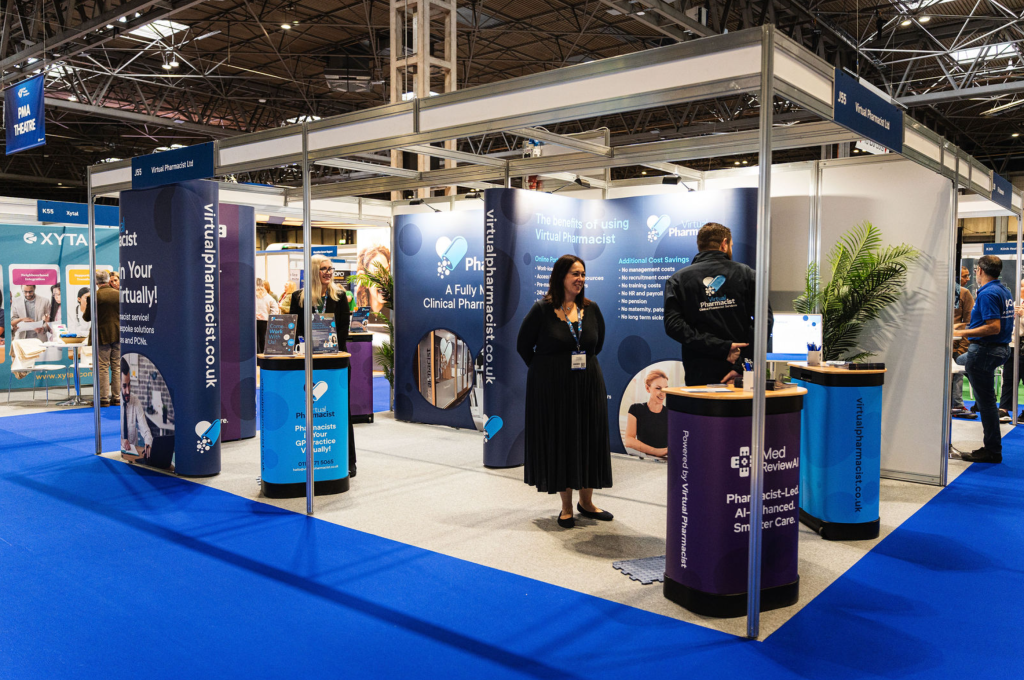
A multi-neighbourhood provider is a proposed new type of contract holder that would co-ordinate neighbourhood health services across several neighbourhoods, working with the GP practices and single neighbourhood providers in its footprint. NHS England’s consultation names a medicines optimisation service among the examples an MNP could deliver, so medicines work is part of the model from the start. This article covers what has been proposed so far and what it could mean in practice.
What is a multi-neighbourhood provider?
A multi-neighbourhood provider is one of two new neighbourhood contracts set out in the 10 Year Health Plan in July 2025. The plan describes single neighbourhood providers covering around 50,000 people, noting that the existing PCN footprint is often well set up as a starting point, and multi-neighbourhood providers covering 250,000 people or more.
According to the plan, MNPs would deliver care that needs to work across several neighbourhoods, with end of life care given as an example. They would work across all GP practices and smaller neighbourhood providers in their footprint, offering a shared back office, digital and estates oversight, data analytics and a quality improvement function. The plan adds that GP federations already play this role in some places.
The Neighbourhood Health Framework, published in March 2026, repeats the working assumption of around 250,000 people or more. It also states that sizes will not be mandated nationally, and that ICBs will commission contracts at the scales they consider appropriate.
Where have the proposals reached?
NHS England ran a consultation on the proposed MNP and SNP contracts from 16 July to 10 September 2026. It was aimed at ICBs, general practice, PCNs, community and other providers, local authorities and patient representatives. NHS England says the responses will inform further, detailed consultation on firmer proposals later in 2026.
The technical document published with the consultation sets out the main proposals:
- The MNP contract would be optional and based on the NHS Standard Contract with an added “Neighbourhood” schedule
- The primary medical care parts of neighbourhood services would be subcontracted by the MNP to single neighbourhood providers
- Awarding an MNP contract would need to follow the Provider Selection Regime or other procurement law
- Commissioners are likely to want evidence that a minimum proportion of local practices support the MNP
- The SNP contract is described as an evolution of the PCN DES, which local systems can take forward at their own pace
The same document says the GMS contract is outside the scope of the consultation, and that local commissioners would define and fund most of the content of the new contracts locally. Everything here remains a proposal until the next round is published.
What does the consultation say about medicines?
The consultation lists medicines among the services that could be commissioned alongside INTs. Its technical document gives five examples: urgent primary medical care, outpatient services, medicines, general practice resilience, and leadership and transformation. For medicines, the example given is “a medicines optimisation service to improve prescribing quality which could include risk or gain share”.
The document says it would expect most of these services to be commissioned from MNPs working with SNPs, where MNPs exist. It also proposes that services planned for the life of an MNP contract are included in the procurement at the outset, to avoid a series of separate procurements later.
A risk or gain share could link part of the payment to what the service achieves. An MNP taking on that kind of medicines service would need a clear baseline, consistent measures of prescribing quality and regular reporting across all its practices.
What medicines work suits a multi-neighbourhood footprint?
Medicines work suits a multi-neighbourhood footprint when it gains from one standard across many practices and draws on population data. Examples include:
- Prescribing quality programmes run across every practice, such as best-value medicines and low-priority prescribing
- Problematic polypharmacy, which the NHS England Medium Term Planning Framework names among ICB prevention goals
- Medicines support for services that work across neighbourhoods, such as end of life care
- Searches and data analysis to find patients who would benefit from review
- Reporting at practice, neighbourhood and whole-footprint level
Work that depends on each practice’s own ways of working, such as repeat prescribing and medication queries, tends to stay close to the practice and its neighbourhood.
How could a managed service support an MNP’s medicines work?
A managed clinical pharmacy service can deliver a defined medicines workstream across a large footprint, under one clinical governance framework, with the commissioning organisation setting priorities and signing off protocols. The work is delivered remotely in each practice’s clinical system, so every action is coded in the practice’s own record.
Reporting per practice and for the whole footprint gives the organisation the measures a prescribing quality service needs. Our prescribing initiatives and schemes service describes how scheme work is scoped, delivered and reported across several practices.
What can federations and PCNs do now?
Groups of practices can build the habits a larger footprint will need while the contract detail is settled. Four practical steps:
- Agree one protocol and one set of searches for a medicines workstream across practices
- Use the same coding conventions, so results can be compared
- Report results per practice and across the group
- Read the next NHS England consultation round when it is published
Our article on aligning PCN medicines work with ICB objectives covers the reporting side in more detail.
What we see in practice
Medicines work across many practices depends on method more than on contract type. In a nine-practice Lincolnshire PCN, we delivered 315 hours of medication reviews to one pathway across all nine practices, and the PCN then moved to a full-year contract. A Norfolk and Waveney PCN received 1,000 structured medication reviews between October and March. A Derbyshire practice claimed £2,960 through an ICB enhanced service for anticoagulant switches, with 37 of 65 screened patients switched where clinically right, and we then ran the same model in a second ICB area.
We have supported 375+ GP practices and 88+ PCNs, with practices and PCNs in 23 ICB areas across all seven NHS regions. See our case studies for the detail.
Related reading
- GP federations and integrated neighbourhood teams: how medicines work is organised
- Neighbourhood health and medicines: how clinical pharmacy gets organised at scale
- What ICBs are asking of medicines optimisation teams in 2026/27
Thinking about medicines work across a larger footprint? Send us an enquiry and we will reply within one working day.
Frequently asked questions
Who could hold an MNP contract?
Local commissioners would decide through the Provider Selection Regime or other procurement law. The consultation records that GP-led organisations and federations may be able to hold and deliver the MNP contract, and asks how procurement can stay proportionate for smaller providers.
Will MNPs replace PCNs?
The proposals keep the GMS contract, and describe the SNP contract as an evolution of the PCN DES that local systems can adopt at their own pace. The consultation proposes that the PCN DES and the SNP contract would not run in the same geography.
How large would an MNP be?
The working assumption is around 250,000 people or more. The Neighbourhood Health Framework leaves the final size to ICBs.
How would MNP contracts be funded?
Local commissioners would fund them locally. The consultation states that there is no new national funding for these contracts.
When will the final contract detail be known?
NHS England says further consultation on firmer proposals for both contracts will follow later in 2026.